Leaked S-1 screenshots show Palantir losing $579M in 2019

Palantir Technologies Headquarters As BP Is Reported Shareholder

Palantir filed an S-1 confidentially to the SEC in early July, but we have so far been waiting for the final document to be published for weeks now with nary a murmur. Now, thanks to some leaked screenshots to TechCrunch from a Palantir shareholder, we might have some top-line numbers.

Full-year revenues and losses

In screenshots of a draft S-1 statement dated yesterday (August 20), Palantir is listed as generating revenues of roughly $742 million in 2019 (Palantir’s fiscal year is a calendar year). That revenue was up from $595 million in 2018, a gain of roughly 25%. That’s growth, although not particularly great, given some of the massive SaaS growth we have seen in recent IPOs like Datadog.

The company’s revenue is a disappointment, after the company was reported to have been on the cusp of $1 billion in revenue for years. Private companies, of course, do not normally disclose their financial results, but the company’s size falls far short of expectations, leaks and other reports.

The real shocker though in these numbers is when you head to the bottom of the company’s revenue statement. In the screenshots of the company’s financials, Palantir lists a net loss of roughly $580 million for 2019, which is almost identical to its loss in 2018. The company listed a net loss percentage of 97% for 2018, improving to a loss of 78% for last year.

The company’s $580 million loss during the period shows at once why the company has needed to raise billions to date, and how far it has yet to go until it can self-sustain.

Gross profit for 2019 was roughly $500 million, about 16% higher than in 2018. The company’s big expense is around sales and marketing, which was roughly $450 million for both years and represented 61% of revenue in 2019.

First half of 2020 is looking slightly better

The story gets a little better in 2020. For the first six months of 2020, Palantir recorded revenues of $481 million, a 49% gain compared to the same period last year. More importantly, Palantir has worked hard to maintain its level of expenses in sales and marketing, research and development as well as general and administrative costs.

Palantir kept expenses in check in the first half of 2020 despite its increase in revenue. In relative numbers, operating expenses changed from 157% of revenues in the first half of 2019 to 107% of revenues in the first half of 2020.

To be clear, that is still really high for a 17-year-old company.

Palantir is increasingly a government contractor, despite attempts to enter the commercial arena

The company’s revenue breakdown is particularly interesting because it finally answers the question about how much it relies on government contracts and if it’s trying to diversify. Palantir is widely known for its government contracting, but in recent years, the company has tried to expand its data products into the private sector.

According to the leaked screenshots shown to TechCrunch, Palantir disclosed its revenue breakdown for the first six months of 2019 and the first six months of 2020. For the first half of this year, Palantir generated $258 million in government-derived revenue (53.5%), compared to $224 million in commercial revenue (46.5%). In 2019, government revenue was $146 million (45%) and commercial revenue was $177 million (55%). Together, that means that government revenue increased by 76%, versus just 27% growth in its commercial business.

That’s actually quite out-of-sync with some of the public comments the company has made about reducing reliance on government contracts for its revenues. The company’s government revenues are higher today both in absolute totals and relatively speaking, begging the question whether its products are competitive in the enterprise space outside of its traditional bastion in government services.

What’s interesting is that almost all of that revenue growth is from existing customers (dated to the end of 2019) rather than new customers in 2020 (despite all that S&M spending). On the government side, $102 million of the $112 million revenue increase (91%) came from existing clients, while $43 million of the $47 million of growth in commercial revenues (91% as well) came from existing customers.

In other words, Palantir remains heavily reliant on its existing customer base — and particularly its government clients — for new growth.

While there is no firm date for the Palantir S-1 that we know of, given the financials are apparently floating around out there, expect it to come sooner rather than later.

We reached out to a Palantir PR contact, who declined to comment.

No parties allowed at the Airbnb IPO

https://player.simplecast.com/ad1f45de-d826-4bbc-80a9-1f15309e9539?dark=true#amp=1

Hello and welcome back to Equity, TechCrunch’s venture capital-focused podcast (now on Twitter!), where we unpack the numbers behind the headlines.

What happens when the entire podcast crew is a bit tired from, you know, everything, and does its very best? This episode, apparently. A big thanks to Chris Gates for helping us trim the fat and make something good for you.

Before we get into the topics of the week, don’t forget that Equity is not back on YouTube most weeks, so if you wanted to see us do the talking with some fun extra from the production team, you can do so here. More to come once I get my new external camera to work.

That done, here’s what Natasha and Dannyand I got into this week:

Whew! We’re doing a lot over at TechCrunch.com, so, stay tuned and know that if we were a bit frazzled this week it’s because we’re working our backends off to bring you neat things. You will dig ’em.

Ok, chat Monday, a show that we’re already planning. Stay cool!

Equity drops every Monday at 7:00 a.m. PT and Friday at 6:00 a.m. PT, so subscribe to us on Apple PodcastsOvercastSpotify and all the casts.

Lambda School raises $74M for its virtual coding school where you pay tuition only after you get a job

In the world of technology, online learning has been one of the bigger beneficiaries of the last several months, with people staying home and away from their normal routines because of the coronavirus pandemic and using that time to expand their knowledge, or more critically, figure out what to do next if they want to change careers, or have found themselves without a job.

Now, one of the startups building a business around virtual computer science education — teaching people sitting at home before it became a mandate — is announcing a large round of funding to capitalise on that demand.

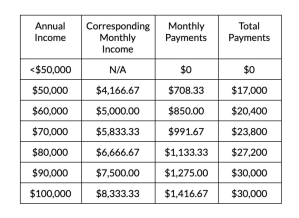
Lambda School, which runs virtual nine- and 18-month (part time) computer science courses for $30,000 — currently covering data science and full-stack web development — with payments for the course based on a sliding scale that only kicks in after you land a job that makes at least $50,000, has raised $74 million in equity in a Series C round.

The investment is largely coming from Gigafund, the VC started by ex-Founders Fund partners in 2017 originally to put more money into SpaceX, with Tandem Fund and Y Combinator (where Lambda School was incubated) also participating. Its list of other backers include GV, GGV, and Stripe. (Tommy Collison, the head of business development at Lambda, is the younger brother of the two Collison brothers who co-founded Stripe.)

Lambda School is not disclosing its valuation but CEO Austen Allred (who co-founded the company with Ben Nelson) confirmed that it is higher than the $150 million that Lambda had reached in its $30 million Series B in January 2019. He also said that he hopes that this will be the last funding that Lambda raises, not because it’s planning an IPO but because it’s aiming to become profitable. Allred confirmed that is not the case yet.

Allred added that the plan will be to use the funds to help the startup meet a surge in demand for its courses.

“There is more demand than we can handle right now, even with the fundraise,” he said. “I don’t know if that’s a good or bad thing.” Currently there are about 3,000 students enrolled, all taking live (not on-demand) classes according to timetables programmed for different timezones.

The money will specifically be used to continue expanding the range of what Lambda School offers, both in terms of content but potentially also in terms of developing its business model.

Case in point: just yesterday, the startup got approved by California’s Bureau for Private Postsecondary Education, after a prolonged period of difficulties with the bureau that saw Lambda cease teaching in the state and get fined.

But part of the deal for approval involved Lambda no longer offering Income Share Agreements to students, for the moment at least. With ISAs a cornerstone of how the company presents its deferred-payment model, Allred said Lambda is still working on making ISAs available but is also looking at “student-friendly substitutes” in the interim.

To be clear, getting approved by that board is not the same as accreditation: Lambda School doesn’t offer official degrees but certificates when students complete the courses. Currently there is no plan to get accreditation to offer degrees, Allred said.

“From a regulatory standpoint we could receive accreditation and grant degrees but [boards] require you to submit changes to curriculum a year in advance and our students can’t afford that. Things like that are a nonstarter until the accrediting bodies change their requirements,” he said, and added that schools that have accreditation are not always better than this.

“There are thousands of schools fully accredited that have a 20% graduation rate,” he said. “It doesn’t make you good. We have to prove our worth to students in other ways, usually through outcomes.”

Lambda School’s funding may be coming amid a surge of demand for its courses, but that doesn’t mean it hasn’t also been a tricky time for the startup.

In April, Lambda cut 19 staff and executives took a 15% pay cut amid market uncertainty due to the coronavirus pandemic (and maybe also to sharpen up its accounts, something that regularly happens when startups are in the process of raising money). The company currently has a team of around 150, which includes both operational and support staff as well as course teachers and team leads (which are essentially teaching assistants). All of them are working remotely at the moment, Allred said.

But even before April, Lambda has faced a lot of negative opinion around how it applies the deferred payment business model. Critics have described the process of paying back fees based on your income as indentured servitude and predatory. And they claim the business model is impractical because of how Lambda itself has to the risk when students don’t make their expected salaries, since the ISA model gives paybacks on a sliding scale based not just on salary, but also on a limit of 24 months to pay back the fees, which means that some students will pay back the full $30,000 and some will not:

Allred didn’t disclose how many default on payments but said that about 15% of students drop out before the end of the first month, which means they pay nothing at all.

These may be sticking points for some people, but not enough to curtail the startup’s growth, or interest among investors.

“We were attracted to Austen as a CEO,” said Stephen Oskoui, a Gigafund partner who is joining Lambda School’s board, in an interview. “Gigafund is very focused on the strength of those that we think will build for multiple decades, and the model for how Lambda School is operating has the potential for tremendous impact.”

India’s Reliance Retail acquires a majority stake in online pharmacy Nedmeds’ parent firm for $83.2M

Inside a Reliance Digital Store As Reliance Jio Goes Live

Reliance Retail  has bought a 60% stake in pharma marketplace Netmeds’ parent firm Vitalic for about $83.2 million, it said today, as India’s largest retail chain looks to expand into new categories and compete more closely with American e-commerce group Amazon.

Reliance Retail said the deal, which grants it a 100% ownership of Vitalic’s subsidiaries (Netmeds,  Tresara, and Dadha Pharma), valued the parent firm at about $134 million. Netmeds, which connects customers to pharmacists and enables door step delivery of medicines, serves 5.7 million customers in more than 670 cities and towns and online.

Through Netmeds, which had raised about $99 million prior to today’s announcement, consumers get access to more than 70,000 prescription drugs for chronic and recurring ailments as well as enhanced lifestyle drugs and thousands of non-prescription goods for wellness, health and personal care.

Reliance Retail plans to expand its ownership in Vitalic to at least 80% by April 2024 and holds the rights to own 100% in the future.

“This investment is aligned with our commitment to provide digital access for everyone in India. The addition of Netmeds enhances Reliance Retail’s ability to provide good quality and affordable health care products and services, and also broadens its digital commerce proposition to include most daily essential needs of consumers,” said Isha Ambani, director of Reliance Retail, in a statement.https://platform.twitter.com/embed/index.html?dnt=true&embedId=twitter-widget-0&frame=false&hideCard=false&hideThread=false&id=1295804177969377280&lang=en&origin=https%3A%2F%2Ftechcrunch.com%2Ftag%2Findia%2F&theme=light&widgetsVersion=223fc1c4%3A1596143124634&width=550px


Reliance Retail, like its sister telecom venture Jio Platforms, is a subsidiary of Reliance Industries, the most valued firm in India. Reliance Industries is run by Mukesh Ambani, Asia’s richest man.

The announcement late Tuesday evening (local time) comes days after Amazon struck a deal with Netmeds, 1mg, PharmEasy and Medlife to sell medicines online in Bangalore. It was the first time Amazon had expanded into this category, it said. The coronavirus pandemic has accelerated the adoption of telemedicine and pharma marketplaces in the country, analysts said.

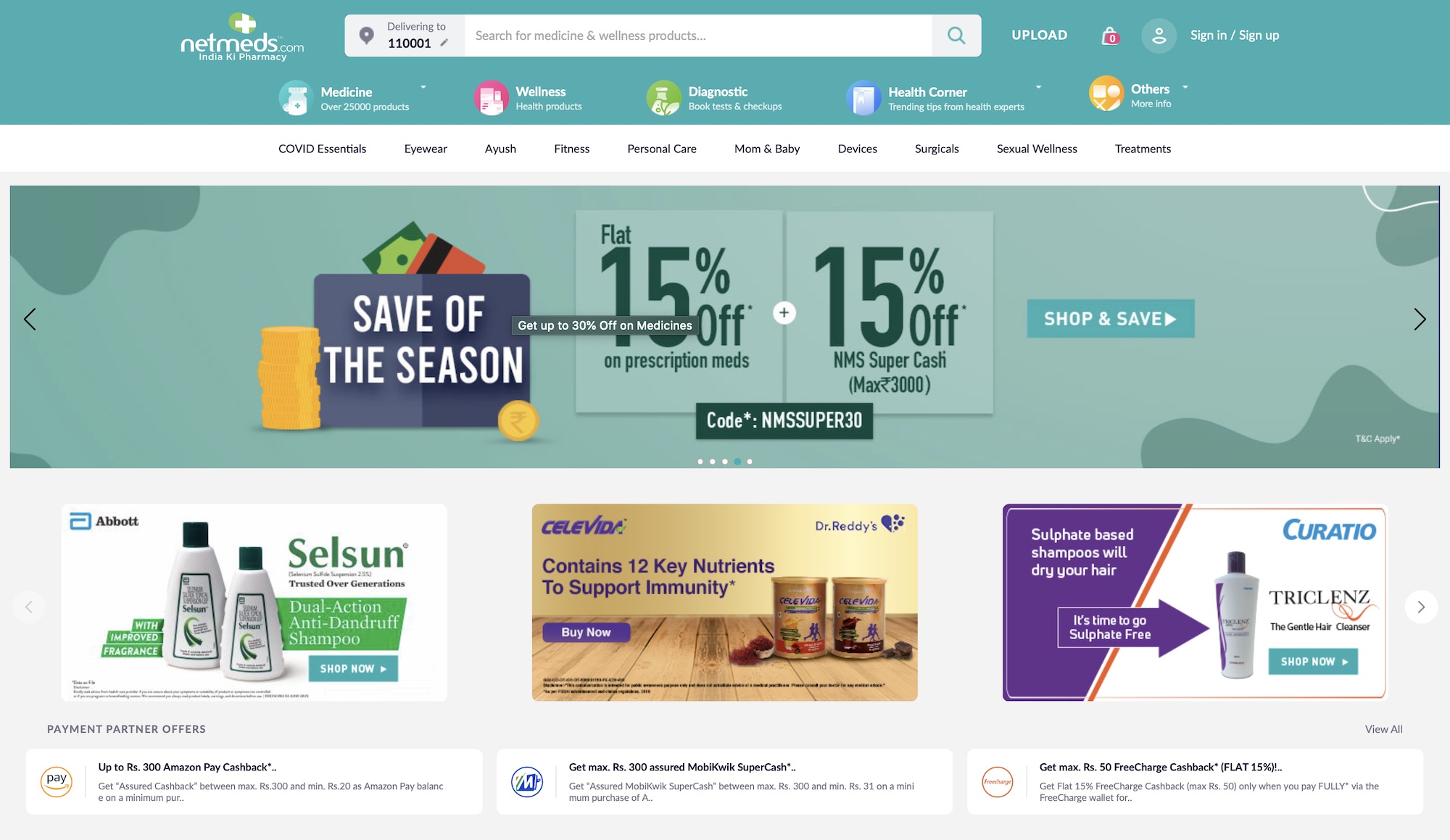
Netmeds is one of the largest online pharmacies in India (Image: Netmeds)
Online sales of medicine in India, for which New Delhi currently does not have clear regulations, presents yet another major opportunity for Reliance Retail, which has expanded its new e-commerce venture — called JioMart — to more than 200 cities and towns in the recent quarters.

Local media has reported that Reliance is also in talks to acquire online furniture store Urban Ladder, milk delivery startup MilkBasket and Bangalore-based lingerie maker Zivame. TechCrunch reported last week that Reliance Industries was also in talks to acquire the India business of TikTok.

“It is indeed a proud moment for ‘Netmeds’ to join Reliance family and work together to make quality healthcare affordable and accessible to every Indian. With the combined strength of the group’s digital, retail and tech platforms, we will strive to create more value for everyone in the ecosystem, while providing a superior Omni Channel experience to consumers,” said Pradeep Dadha, founder and chief executive of Netmeds, in a statement.

Google launches Kormo app in India to help people find entry-level jobs

Daily Life In Delhi

Google  said on Wednesday it has expanded its jobs app, called Kormo Jobs, to India as the search giant looks to offer a helping hand to millions looking for entry-level roles and further displace Microsoft’s LinkedIn relevance in the world’s second largest internet market.

The company first launched Kormo Jobs in Bangladesh in 2018 and expanded it to Indonesia last year. Also last year, Google made Kormo available in India under the brand Jobs as a Spot on Google Pay app.

Since making Jobs available as a Spot, Google says a number of companies, including Zomato and Dunzo — a Bangalore-based startup it has invested in — have posted more than 2 million verified jobs on the platform.

Google said today it is rebranding the Jobs Spot on Google Pay as Kormo Jobs in India and also making its standalone Android app available in one of its key overseas markets.

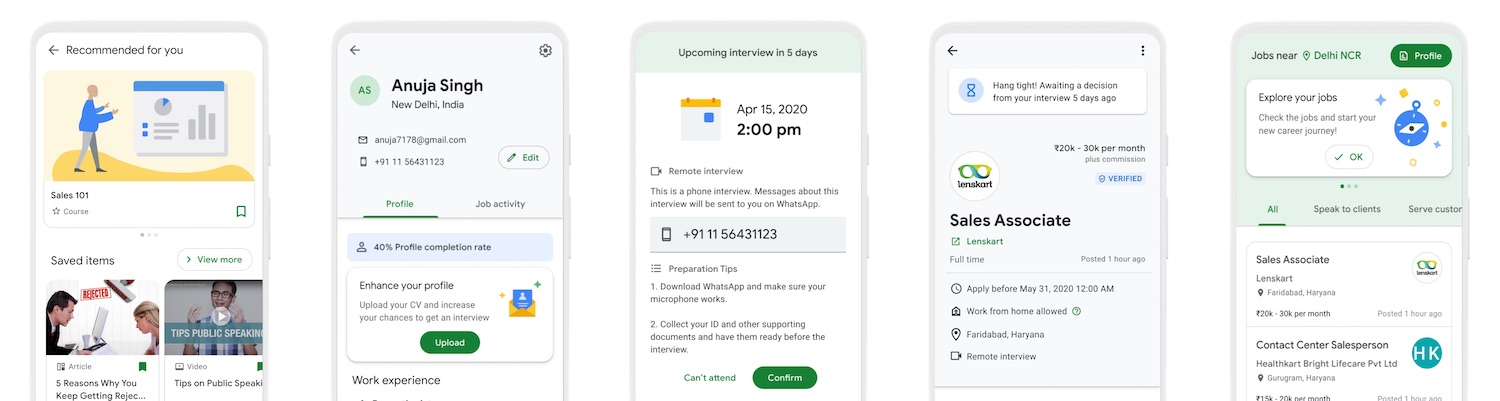
In addition to helping users identify open calls for entry-level roles, the Kormo Jobs app is also designed to help them learn new skills, and easily create a CV.

Bickey Russell, regional manager and operations lead at Kormo Jobs, said the company will continue to invest in bringing new features and jobs to the app in the future.

“In the wake of the pandemic, the jobs landscape stands altered, with demand shifting to new services that require different sets of skills and experience. Businesses of all sizes face the challenges of the new normal, while job seekers are having to adapt to this shift quickly,” wrote Russell in a blog.

“We are heartened to be able to play a helpful role in facilitating connections to impact lives for the better, including introducing important features like remote interviewing earlier this year to ensure social distancing,” he added.

The move further illustrates Google’s growing interest in courting a big slice of the job-related search queries. The company launched a jobs search search engine in 2017 in the U.S., which it has expanded to several markets since. Earlier this month, it rolled out a virtual visiting card feature in India.

Google’s push into this category stands to hurt LinkedIn,  which does not have a strong presence in emerging markets. In India, for instance, LinkedIn had about 24 million monthly active users on Android in the month of July, according to App Annie, up from about 22 million during the same period a year ago. Google reaches about 400 million users in India.

Regardless, any app that helps people find jobs of any kind would come in handy to tens of millions of Indians — if not more — as the nation reports record-high unemployment figures at the height of a global pandemic.

Exo raised $40 million for its handheld medical imaging device

Exo, a developer of new diagnostic hardware for the medical industry, has raised $40 million in a new round of funding as investors continue to back new companies that are reducing the cost and complexity of medical devices.

Cost, portability, image quality and the inability to image dense body compositions have all limited the impact that diagnostic tools like ultrasounds can have on patient care around the world, according to a statement from the company.

Exo solves that problem by building on a patented piezoelectric micromachined ultrasound transducer, the company said.

Its device improves image quality, while an accompanying software toolkit boosts the diagnostic capabilities of the device.

Exo predicts that the worldwide point of care ultrasound market will reach $1.5 billion in 2024 and grow at nearly 10 percent a year.

“Emergency room phyisicians around the world are often tasked with solving some of the most urgent healthcare problems — COVID-19 diagnosis and complications, cardiac emergencies, internal bleeding — without being able to see clearly into a patient they only have minutes to diagnose and treat,” said Exo chief executive Sandeep Akkaraju, in a statement.

The new $40 million round to back the company’s technology follows a $35 million investment in 2019 and brings the company’s total capital raised to nearly $100 million, according to a statement. The funding was led by Fiscus Ventures, Reimagined Ventures (both affiliates of Magnetar Capital) and Action Potential Ventures, with additional participation from TDK Ventures, Solasta Ventures and all previous investors, including Intel Capital and Applied Ventures.

Exo’s team comes from consumer tech giants like Apple and Google and leading medical device companies like GE, Johnson & Johnson, Maxim, Medtronic, and Siemens.

“As both an emergency room phyisician and a venture capitalist, I know firsthand the transformative potential of the products that Exo is bringing to market,” said Dr. Ted Koutouzis of Fiscus and Reimagined Ventures, in a statement. “The Exo team is focused on a building a device that works seamlessly within the often chaotic and urgent environment of a hospital, and delivers the image quality, clean interface, and diagnostic tool sthat doctors have dreamed about having in the palm of our hands.”

The Exo hardware comes with a suite of software tools that have been designed to integrate with existing workflows. And the company has plans to use its initial foray into medical imaging as a way to land and expand into a broader suite of tools for the hospital or urgent care environment. The company envisions a multi-functional device that can perform a number of different diagnoses.

“Exo is creating a platform technology that can drive true adoption of point of care imaging in emergency rooms and critical care units, can facilitate advanced surgical robotics and endoscopic procedures, and could enable therapeutic modalities in non-invasive neuromodulation and drug-delivery,” said Juan Pablo Mas, of Action Potential Venture Capital (the corporate venture arm of GlaxoSmithKline focused on bioelectronic technologies)

Blue Origin’s human lunar lander team delivers full-scale engineering mockup to NASA

Blue Origin and the members of its “national team” – Lockheed Martin, Northrop Grumman and Draper – have delivered a full-scale engineering prototype of their human lunar lander to NASA for the agency to examine and review as it readies to build the real thing for eventual use in NASA’s Artemis program Moon missions.

The Blew Origin crew lander is now ready to undergo testing at NASA’s Johnson Space Center in Houston, Texas. This mock-up is not a functional version of the lander, but it does include full-sized components of the planned lander system, including the descent element that will be built by Blue Origin, and the ascent element that partner Lockheed Martin will be producing. Overall, the entire mock-up article measures just under 40-feet high.

The purpose of this engineering prototype is to allow for testing and simulation of crew interactions. Starting this early with the mock-up means that as they develop the eventual production lander, Blue Origin and its partners can gain valuable insights about aspects of the design including instrument and component layout, visibility through windows from the cabin, ergonomics of seating and entry and exit points and much more.

Simulation can help with a lot of the elements of spacecraft design, as can leveraging previous designs – both of which are things that Blue Origin and the national team are doing. But there’s a lot to learn that can only be gleaned through actual humans pretending to really use the spacecraft as they would on a mission, and many of those wouldn’t be caught by computer simulation or history lessons alone.

Blue Origin and its national team are one of three companies that won a first round of Human Lander System (HLS) contract awards from NASA. It’ll continue to flesh out this engineering mock-up over time, adding elements that will make it ever-closer to the final production model as development continues. Ultimately, it hopes to support NASA with its ambitious goal of landing the next American man and the first American woman on the surface of the Moon by 2024.

Apple quietly acquired Israel’s Camerai, formerly Tipit, a specialist in AR and camera tech

Apple is well known for picking up smaller startups on the hush-hush to augment its business, and today news leaked out about the latest of these… nearly two years after the fact. Sometime between 2018 and 2019, the iPhone giant reportedly acquired and shut down Camerai, an augmented reality and computer vision company based out of Israel, which used to be called Tipit.

The news was first reported earlier today by Israeli newspaper Calcalist, and we have reached out to ask Apple directly about it. In the meantime, Jonathan (Yehonatan) Rimon, who had been Camerai’s CEO and co-founded the company with Moty Kosharovsky, Erez Tal, and Aaron Wetzler, declined to comment one way or the other on the report to us when we contacted him directly about it. A separate source confirmed the story to us. We’ll update as we learn more.

Calcalist said that the startup sold for several tens of millions of dollars. From being founded in 2015, Camerai had raised around $5 million — including a $2.5 million round in 2017 and another unreported $2.5 million in 2018 — with investors including the Atooro Fund and another called the SKO Fund.

It seems that the acquisition came on the heels of multiple approaches from a number of companies at a time when AR was arguably at a peak of hype and many big tech companies wanted a piece of the action. (Recall that 2018 was the year when Magic Leap raised nearly $1 billion in a single round of funding.) Back in 2018, we heard rumors that those approaching and looking at the startup included Apple, Samsung, and Alibaba.

The Calcalist report said that Camerai employees joined Apple’s computer vision team, and that the company’s technology has been incorporated into Apple products already. It’s not clear specifically where and when, but recall that both iOS 13 and iOS 14 have featured big software updates to the camera.

Camerai had built an SDK and specifically a range of software-based AR tools to help edit and use camera-made images in more sophisticated ways,

Its tech included the ability to detect different objects in the picture, and outline them with precision to alter them cosmetically; the ability to outline and apply filters across the whole image; a “skeleton tracking” neural network API that could detect and draw body joints in real time overlaid on a picture of a human; and its own version of selective focus for enhanced portrait modes (remember this was 2018 and this was not standard on phones at the time). Camerai’s site is shut down, but here are some screenshots of how it all looked, pulled from the Internet Archive:

Camerai’s acquisition underscores a couple of interesting, and ongoing, trends.

The first of these is in the development of smartphone technology, particularly around cameras. Some of the more interesting innovations in smartphone camera technology have come not out of improvements in hardware, but software, where the application of breakthroughs in artificial intelligence can mean that an existing combination of sensor, lens, and on-phone and cloud processors produce a better and more technically dynamic picture than before.

At a time when smartphone replacement cycles have really slowed down and we are seeing also slower innovation on hardware, bolting on talent and tech created outside the phone companies is one way to gain a competitive edge.

(Separately, I wonder if making cutting edge technology software-based also means that there could be scope in the future for paid updates to older phone models, which could mean more incremental revenues from consumers that don’t want to invest incompletely new devices.)

The second trend that this deal underscores is how Israel remains fertile ground for bigger companies on the hunt to pick up and bolt on technology, and that the secretive approach is likely to remain for some time to come.

“In Israel there are over 350 global corporate companies, from 30 countries, who search for local innovation. Some of them like Apple, MS, Google, even have local R&D [operations],” said Avihai Michaeli, a Tel Aviv-based senior investment banker and startup advisor. “Those global companies look mainly for tech which could serve as its competitive edge. It is not the first time that an acquired startup is asked not to publish it was acquired, nor talk about it.”

Gmail, Google Drive hit by outrage.

gmail-app-icon-ios

Google says it has resolved the issue that was affecting a number of its services. Our original story follows.

Having trouble accessing your Gmail, Google Drive, or Google Meet? You’re not alone. Thousands of users, mostly in India, parts of the U.S., Australia, Japan, and Malaysia are reporting that they are unable to access the aforementioned Google services.

Some users have reported that they are unable to log-in into their Gmail accounts, while others are saying new emails are not showing up in the app and they are unable to add attachments. Some Google Drive users, including yours truly, are unable to upload new files to the cloud.

Third-party web monitoring firm DownDetector has corroborated the reports that began pouring in at around 04:40AM GMT. Google has acknowledged the existence of this outage to G Suite users, saying it is investigating the issue.

“We will provide an update by 8/20/20, 1:30 PM (IST) detailing when we expect to resolve the problem,” it wrote. More than two billion users rely on G Suite, Google said in March this year.

In an update moments ago, Google said, “Our team is continuing to investigate this issue. We will provide an update by 8/20/20, 1:51 PM with more information about this problem. Thank you for your patience. Gmail sending issues, Meet recording issues, Creating files issues in Drive, CSV user upload issues in Admin Console, Posting message issues in Google Chat.”

Tokyo-based collaboration platform BeaTrust lands $2.8 million seed round

Founded just four months ago, Tokyo-based BeaTrust has raised a JPY 300 million (about USD $2.83 million) seed round for its enterprise collaboration platform. The startup’s ambitious goal is to change corporate culture at large Japanese companies before expanding into other countries.

The round came from CyberAgent Capital; DNX Ventures; ITOCHU Technology Ventures; STRIVE; One Capital; Delight Ventures; PKSHA/SPARX Algorithm 1st; and Mizuho Capital, along with undisclosed individual participants.

BeaTrust’s platform allows employees at large companies to discover colleagues in different departments with similar interests and skills, and gives them tools to work together on projects.

The startup’s co-founders, Kunio Hara and Masato Kume, met while working at Google in Japan. Before Google, Hara held positions in Tokyo and Silicon Valley at Sumitomo Corporation, Softbank, Silicon Graphics and Microsoft, while Kume worked at Asatsu-DK. During their time at Google, the two focused on helping Japanese startups scale by using Google’s tools.

Hara told that BeaTrust was inspired by his experience working at companies in the United States and Japan, and by the co-founders’ time at Google, where they found cross-department collaboration was an intrinsic part of the culture. The two began to think about how they could bring the same qualities to large Japanese corporations.